
Introduction
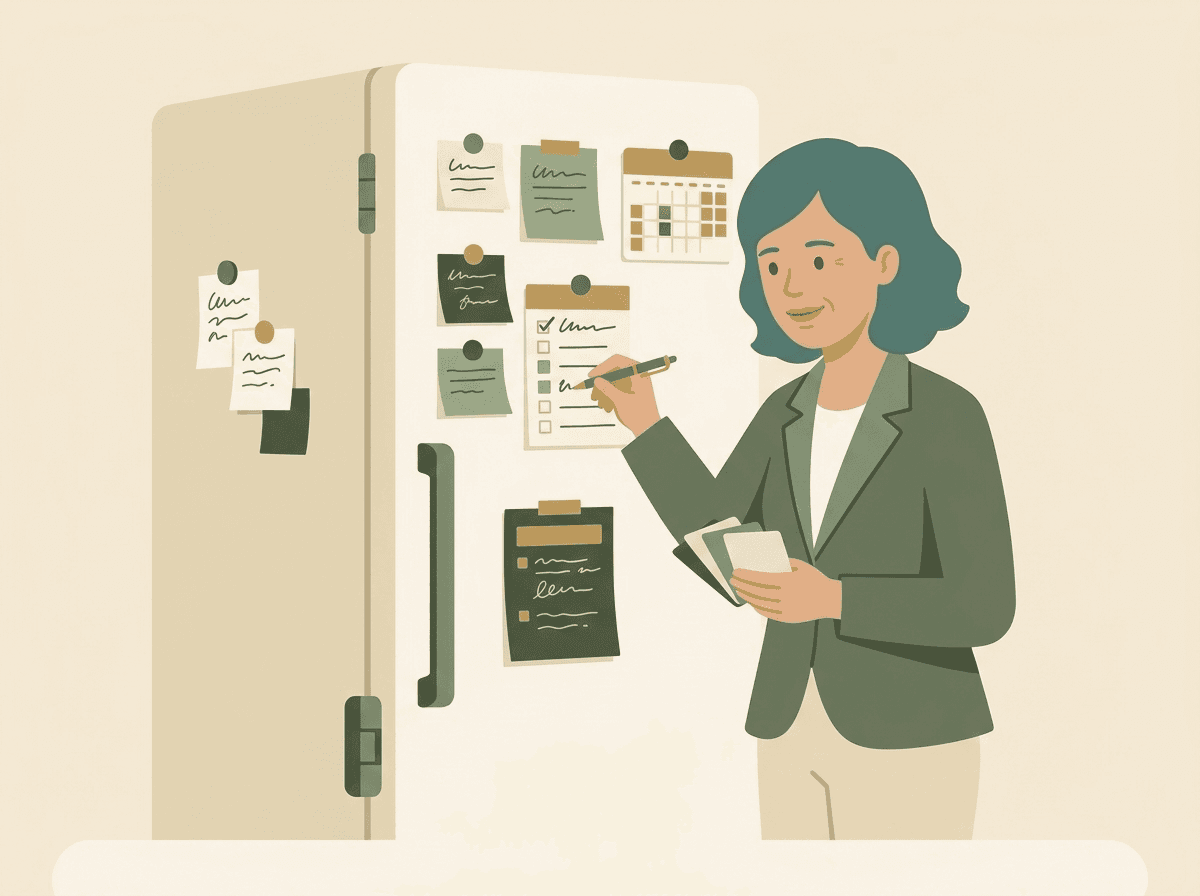
The Double-Checker is the Perimenopause Quiz character whose most prominent symptom is the everyday slip: why she walked into the room, where the phone went, whether she already told this story, whether the door got locked. None of it is important in itself, which is what makes it maddening; women with this pattern still hold the mortgage, the meeting and the school calendar without dropping any of them. What has changed is the automatic layer, the things done without thinking, and her response has been very on-brand: she checks. She is also far from alone: in one study of more than 12,000 women, 81.7% of those aged 50 to 54 reported memory complaints (Hayashi et al., 2025).
"There's a list of my lists."A Double-Checker, Level 2
The checking is not the problem; it is the coping. Re-reading the sent email, photographing the stove before a trip, patting the bag for the phone that is in her hand. Each check works, which is why there are more of them every month. What she wants back is not the checklist. It is the autopilot that used to make checklists unnecessary.
The Autopilot Problem
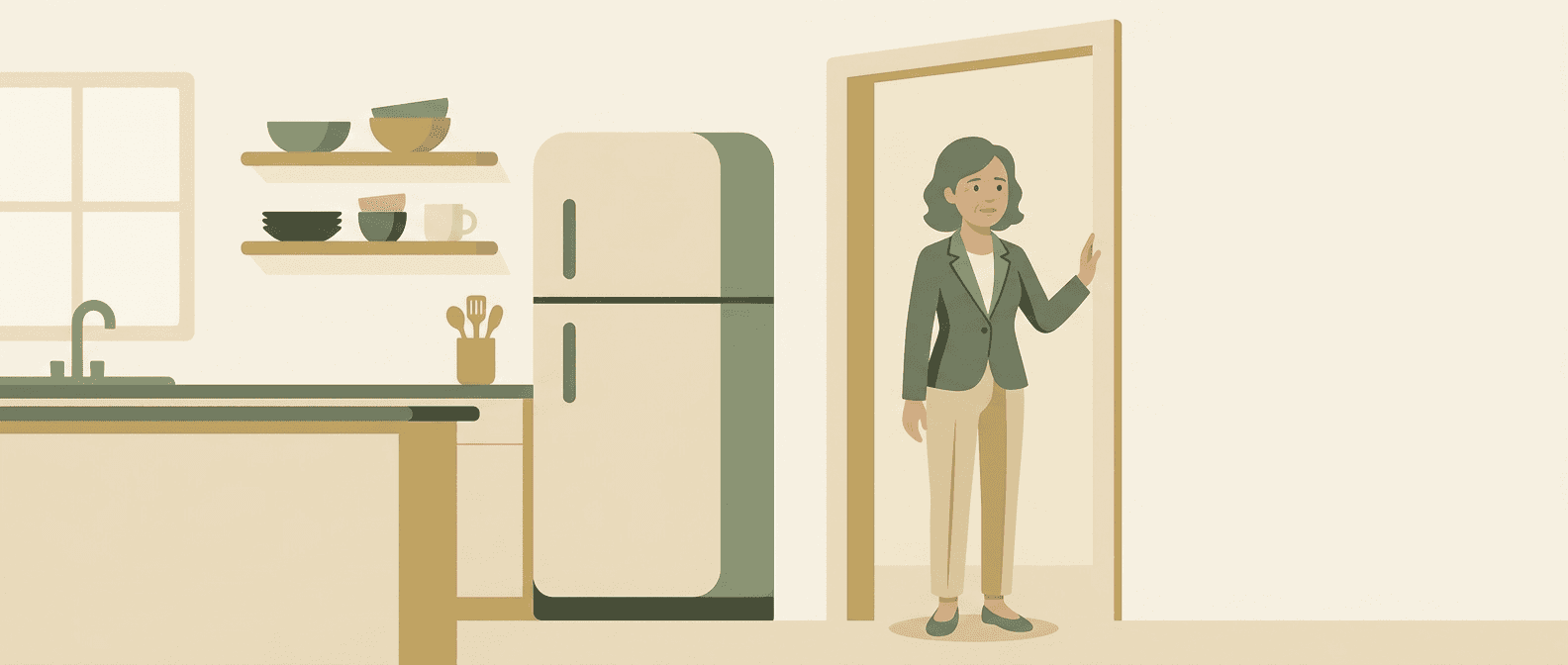
The Double-Checker's slips have a recognizable shape, and the shape is the reassuring part: what drops is the automatic, not the important. The reason for walking into the room, the location of the glasses, the story told twice; the things the brain files without paying attention, because attention was somewhere else, running the rest of the operation. The doorway thing is real, and universal enough that researchers have a name for it: walking through a doorway prompts the mind to close one set of mental tabs and open another (the location updating effect).
The slips cluster when she is doing four things at once, and she is almost always doing four things at once; women with this pattern are typically the household's air-traffic controller. They multiply at the end of the day and after broken nights, and they retreat when life gives her one thing at a time, which it rarely does.
Level 2: The Strategist
At Level 2 the Double-Checker has stopped joking her way past it. The slips have been part of life for a year or more, and she has answered them the way she answers everything: with better systems. The lists have merged into one app, the calendar has a color code, the keys have a bowl with a fixed address. She has read about it at midnight, tried a supplement or two chosen from a search result, and somewhere along the way said it out loud to a doctor and heard "that's just normal aging," which ended the conversation without answering the question. The emotions at this level are different from the first year: less fluster, more frustration; less self-mockery, more quiet resentment at running a flawless operation nobody knows is compensating for anything; and underneath both, a growing suspicion that the answer is not another list.
Level 2 Double-Checkers know their pattern: the crowded weeks are the slippery weeks, the bad nights are the worse mornings. What they usually have not done is connect that pattern to the transition, because nobody offered the connection when she asked.
 Made for Double-CheckersThe two ingredients behind her formulaMagnesium L-threonate1,500 mgSupports a settled nervous systemCiticoline500 mgSupports focus and word recallFind out more
What Hasn't Changed

Why This Is Happening
Perimenopause is the stretch of years before the final period. It most often begins between 40 and 50, sometimes earlier, and lasts anywhere from four to ten years. It is identified by symptoms and their pattern over time, not by a single blood test, and it is very often confirmed in hindsight.
A Changing Supply
It is not a slow, tidy decline in hormones. Estrogen and progesterone swing, sometimes higher than they have ever been, then lower, then back, and the brain feels every swing before the calendar shows one. Progesterone is usually the first to drift, which is why cycle changes are often the earliest sign. For many women, though, the first sign is not a period at all. It is a word, a night, a temperature, or a temper.
The brain is involved for a simple reason: it is full of estrogen receptors, and they are concentrated in the regions that handle memory, language, mood and body temperature. Estrogen supports the energy supply to these regions and the signaling between them. When levels fluctuate, so does the speed of the work those regions do (Mosconi et al., 2024).
Working Memory on a Budget
For the Double-Checker, the affected job is working memory: the mental sticky note that holds "scissors" from the kitchen to the drawer, and "lock the door" from thought to action. The sticky note is one of the most energy-expensive things the brain runs, and it is exactly the function that shrinks first when the energy supply fluctuates. Under load, items fall off the note, and the automatic ones, filed without attention, fall first. In the largest long-term study of American women through midlife (SWAN), processing speed measurably dipped during late perimenopause (Greendale et al., 2009). In a Japanese study of more than 12,000 nurses, 81.7% of women aged 50 to 54 reported memory complaints (Hayashi et al., 2025).
Two things follow. First, the slips are a function of load on a smaller note, not of a failing memory; the important things live in a different, sturdier filing system, which is why they are not slipping. Second, hormone levels on any one day say nothing about the other days, which is why a "normal" blood test and a real pattern of slips can both be true at once.
Her Options
Rule Out the Look-Alikes
Several common, treatable things crowd the same mental sticky note and are worth excluding before anything else: low iron (ferritin), an under-active thyroid, low vitamin B12, low vitamin D, poor sleep, and some medications. One set of blood tests answers most of them, and a normal result is useful information, not a dead end.
Talk to Someone Who Knows the Transition
"Normal aging" was about that doctor, not about her options. Bring the pattern this time: the crowded-week connection, the bad-night connection, where her cycle sits, and take it to someone trained in the transition. The Menopause Society keeps a directory of practitioners who have completed menopause training: Find a Menopause Practitioner.
Hormone Therapy
A legitimate option for many women, and not suitable or not wanted by others. Everything on this page works alongside it or without it. Many women find real benefit for the body-wide symptoms; on the brain symptoms the evidence is still mixed. It is worth a conversation with a healthcare professional who knows the transition.
Supplementation, With the Doses Printed
Several single ingredients have been studied for memory and attention in adults at specific doses. The rule a pharmacist applies: the dose has to match the studies, the label has to show it, and anything new gets checked against current medications, thyroid medicines, blood thinners, sedatives and breast-cancer treatments in particular. The midnight purchases deserve the same audit: which form, what dose, chosen for what. The full breakdown is under What She Can Do below.
Things to Avoid
Alcohol, which fragments sleep and taxes the next day's attention. Caffeine after lunch. Screens in bed. Adding a fourth app to solve what the third app didn't. Running four fronts at once all day without a break, where four fronts means children, parents, work and household. Clinics that sell a hormone test as a diagnosis. Blends that list ingredients without doses.
What Happens Next
By Level 2 the question has changed. It is no longer "why am I so scattered?" It is "what actually works?" The honest answer is that her own tracking already contains it: the slips follow the load and the nights, which means the levers are the load and the nights, not another app. Handing over one whole domain (the sports schedule, the trash, the groceries) does more for the sticky note than any list, because delegated domains stay gone. Protecting sleep does the rest of the heavy lifting, since every broken night shrinks tomorrow's note. And the rule-outs, if the first doctor skipped them, are still sitting there, cheap and quick.
The data carries the same quiet reassurance it always did: in the SWAN study, the cognitive dip of late perimenopause was, for most women, transient; performance recovered after menopause (Greendale et al., 2009). Not a promise, but a direction, and it points the opposite way from the story the checking has been telling her.
What She Can Do
These are findings from studies of single ingredients at specific doses. They describe what researchers observed, not what any product will do.
- Creatine monohydrate, 5g a day. Pooled trials in adults associated creatine supplementation with better short-term memory and reasoning, with the clearest effects in older adults and under sleep loss (Avgerinos et al., 2018; McMorris et al., 2007). Most blends use 1g or less; the studies used 5g.
- Citicoline, 500mg a day. In a placebo-controlled trial of healthy adults over 50, twelve weeks of citicoline was associated with improved episodic memory (Nakazaki et al., 2021).
- Magnesium L-threonate, 1500mg a day. Studied for sleep quality and daytime functioning in adults (randomized controlled trial, 2024). Relevant because the crowded weeks and the broken nights arrive together.
- Ashwagandha root extract, 300mg a day. Studied at 300 to 600mg a day for perceived stress and sleep quality in adults (Chandrasekhar et al., 2012; 300mg/day trial, 2025).
Doses matter, and so does the label. Before starting anything, check it against current medications with a pharmacist.
Conclusion
A Level 2 Double-Checker has already done the hard part: she noticed, she built, and she ran the household's control tower flawlessly while quietly doubting the controller. What this stretch asks of her is not a better system, it is a better deal: rule out the look-alikes, take the pattern to someone trained to read it, hand over a domain, and protect the nights that size tomorrow's sticky note. The lists were never the confession she feared they were. They were the operations manual of a woman running four fronts through a supply change, and they are excellent.
This quiz is educational and is not a diagnostic tool or a substitute for medical advice.