
Introduction
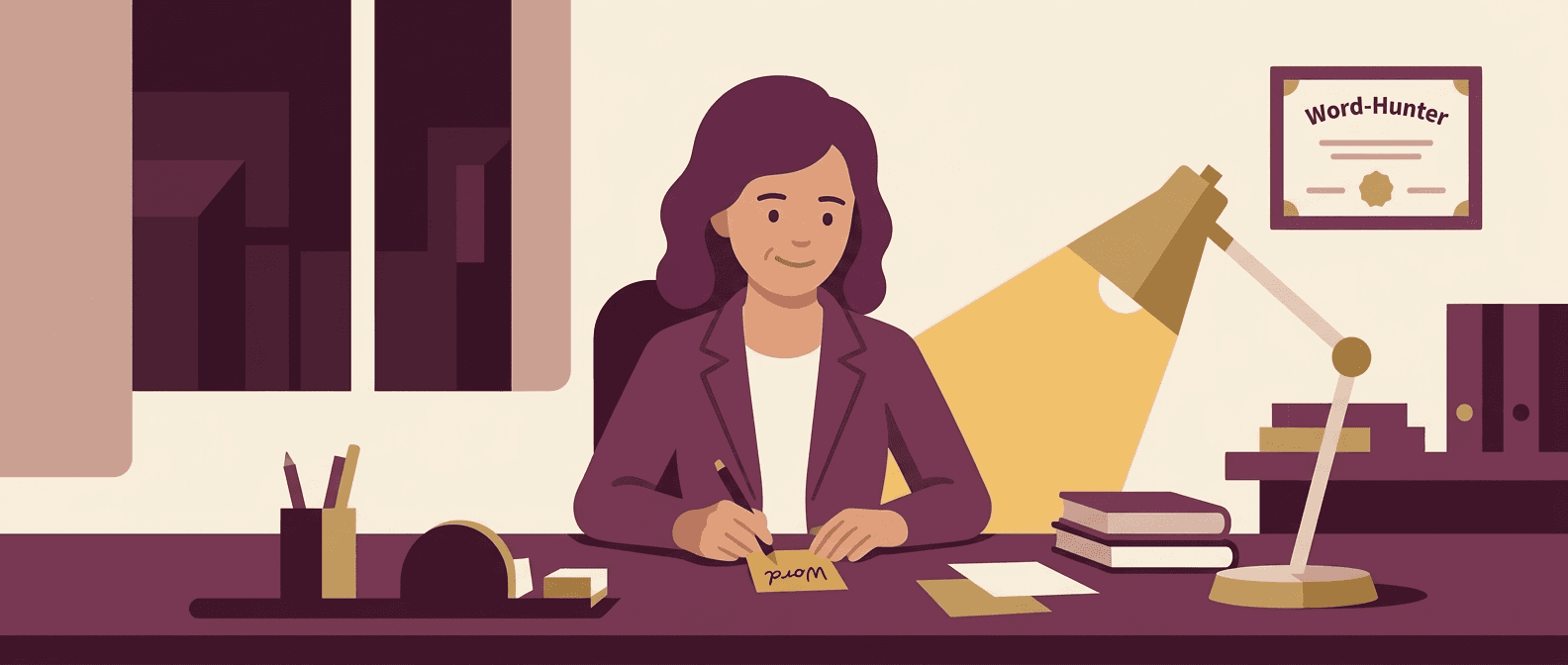
The Word-Hunter is the Perimenopause Quiz character whose most prominent symptom is the word on the tip of her tongue: the ordinary noun that vanishes mid-sentence, the name that will not surface, the substitute ("the thing, for the floor") that arrives in its place. Women with this pattern tend to be quick, valuing efficiency and optimizing every aspect of their lives: work, relationships, hobbies, the calendar. Among their peers they are relied upon for information, planning and getting things done, which is exactly why this symptom feels so prominent. Most are still operating well above standard, but from where they sit, even a small drop in efficiency reads as a major change in output. She is also far from alone: in one study of more than 12,000 women, 81.7% of those aged 50 to 54 reported memory complaints (Hayashi et al., 2025).
"I know my bad weeks before they start. My husband just learned to bring me the word and keep walking."A Word-Hunter, Level 3
Luckily, the word is not gone. It is delayed, and it usually returns minutes later, unprompted, once the conversation has moved on. Word-Hunters know this, and it does not make the moment any easier. They tend to replay the lapse long after everyone else has forgotten it, turning over how such a simple word could go missing. Being harder on themselves than anyone else would be is part of the pattern.
The Word That Comes Back
The Word-Hunter's lapses have a recognizable shape. They favor nouns over verbs, names over faces, and the words she uses most over the ones she rarely needs. The symptom is most prominent at the end of the day, after a poor night, and in the middle of a sentence when other people are waiting. Mercifully, the lost words almost never touch the things she knows deeply; a Word-Hunter can lose the word "nail clipper" while explaining a budget to the cent.
Women with this pattern develop fill-in words in place of the forgotten one. "The thing." "You know." "What's it called." A hand circling in the air. These are not signs of a fading mind. They are signs of a fast one, working around a slow link. In their minds, they can visualize and understand exactly what they’re trying to articulate, but the word won’t come out.
Level 3: The Veteran
At Level 3 the Word-Hunter has been at this for years, and she has built what no appointment ever gave her: a working map of her own transition. She knows what a bad week looks like, what tends to start one, and what a good stretch feels like when it arrives. She may be on hormone therapy that helped almost everything except the words, or she may be unable or unwilling to take it; either way, she stopped expecting a single fix a long time ago. The emotions at this level run quieter and deeper than the early years: fatigue rather than panic, a real grief for the ease she used to have, and an expertise she never asked for. She can explain this transition better than many of the professionals she has sat across from, and she is tired of having to.
The fear changes shape at Level 3. It is no longer "what if this is something serious." It is "what if this is just who I am now." That question deserves a direct answer, and the data has one.
 Made for Word-HuntersThe two ingredients behind her formulaCiticoline500 mgSupports focus and word recallCreatine5gBrain energy when sleep is shortFind out more
What Hasn't Changed

Why This Is Happening
Perimenopause is the stretch of years before the final period. It most often begins between 40 and 50, sometimes earlier, and lasts anywhere from four to ten years. It is identified by symptoms and their pattern over time, not by a single blood test, and it is very often confirmed in hindsight.
A Changing Supply
It is not a slow, tidy decline in hormones. Estrogen and progesterone swing, sometimes higher than they have ever been, then lower, then back, and the brain feels every swing before the calendar shows one. Progesterone is usually the first to drift, which is why cycle changes are often the earliest sign. For many women, though, the first sign is not a period at all. It is a word, a night, a temperature, or a temper.
The brain is involved for a simple reason: it is full of estrogen receptors, and they are concentrated in the regions that handle memory, language, mood and body temperature. Estrogen supports the energy supply to these regions and the signaling between them. When levels fluctuate, so does the speed of the work those regions do. In one imaging study, the density of estrogen receptors in women's brains rose across the transition, and the rise tracked with memory lapses and mood changes (Mosconi et al., 2024).
Retrieval Runs on Estrogen
For the Word-Hunter the affected job is retrieval. Word-finding depends on fast connections between the brain's language areas and its memory stores, and those connections run on estrogen-sensitive circuits. In the largest long-term study of American women through midlife (SWAN), verbal memory and processing speed measurably dipped during late perimenopause, and the dip was not explained by poor sleep alone (Greendale et al., 2009). In a Japanese study of more than 12,000 nurses, 81.7% of women aged 50 to 54 reported memory complaints (Hayashi et al., 2025).
Two things follow. First, the retrieval delay is a function of the transition, not of intelligence, effort or character. The same woman who lost the word "fridge" can still run the meeting. Second, hormone levels on any one day say nothing about the other days, which is why a "normal" blood test and a real pattern of symptoms can both be true at once.
Her Options
Rule Out the Look-Alikes
Several common, treatable things produce the same word-finding lapses and are worth excluding before anything else: low iron (ferritin), an under-active thyroid, low vitamin B12, low vitamin D, poor sleep, and some medications. One set of blood tests answers most of them, and a normal result is useful information, not a dead end. This matters even more after years in the transition: a new or changed symptom at this stage deserves its own check, not an automatic perimenopause label.
Talk to Someone Who Knows the Transition
Bring a list of symptoms with dates, personal and family history, and everything currently being taken, including supplements. Not every doctor is trained in menopause, and some common responses ("you're too young", "it's stress", "it's normal aging") close the conversation early. A tracked list is the best answer to them. The Menopause Society keeps a directory of practitioners who have completed menopause training: Find a Menopause Practitioner.
Hormone Therapy
A legitimate option for many women, and not suitable or not wanted by others. Everything on this page works alongside it or without it. Many women find real benefit for the body-wide symptoms; on the brain symptoms the evidence is still mixed. It is worth a conversation with a healthcare professional who knows the transition.
Supplementation, With the Doses Printed
Several single ingredients have been studied for memory and attention in adults at specific doses. The rule a pharmacist applies: the dose has to match the studies, the label has to show it, and anything new gets checked against current medications, thyroid medicines, blood thinners, sedatives and breast-cancer treatments in particular. With the right information, supplements can be a first step in a woman’s ownership of her symptoms. A full breakdown of the latest research on supplements for perimenopause and menopause is under What She Can Do below.
Things to Avoid
Alcohol, which fragments sleep and worsens next-day recall, and raises breast-cancer risk. Caffeine after lunch. Screens in bed. Clinics that sell a hormone test as a diagnosis. Blends that list ingredients without doses.
What Happens Next
The turbulence of this transition is front-loaded. The wildest hormonal swings belong to perimenopause itself; after the final period the swings flatten, and for most women the brain gets a steadier supply to work with. In the SWAN study, the dip in verbal memory during late perimenopause was, for most women, transient; performance recovered after menopause (Greendale et al., 2009). That is not a promise for any one woman, and a Veteran has earned the right to be skeptical of promises. It is the pattern in the data, and it points the opposite way from "this is just who I am now."
What a Level 3 Word-Hunter has that no newcomer has is the map. Years of tracked pattern is exactly what makes the next conversation with a menopause-trained practitioner productive, exactly what makes any change she tries measurable, and exactly what the younger women around her will one day need to borrow. She is not at the end of anything. She is the most informed woman in most rooms she walks into.
What She Can Do
These are findings from studies of single ingredients at specific doses. They describe what researchers observed, not what any product will do.
- Creatine monohydrate, 5g a day. Pooled trials in adults associated creatine supplementation with better short-term memory and reasoning, with the clearest effects in older adults and under sleep loss (Avgerinos et al., 2018; McMorris et al., 2007). Most blends use 1g or less; the studies used 5g.
- Citicoline, 500mg a day. In a placebo-controlled trial of healthy adults over 50, twelve weeks of citicoline was associated with improved episodic memory (Nakazaki et al., 2021).
- Magnesium L-threonate, 1500mg a day. Studied for sleep quality and daytime functioning in adults (randomized controlled trial, 2024). Relevant because the Word-Hunter's worst days follow her worst nights.
- Ashwagandha root extract, 300mg a day. Studied at 300 to 600mg a day for perceived stress and sleep quality in adults (Chandrasekhar et al., 2012; 300mg/day trial, 2025).
Doses matter, and so does the label. Before starting anything, check it against current medications with a pharmacist.
Conclusion
A Level 3 Word-Hunter has done years of unpaid, unacknowledged work: noticing, adapting, carrying the household's memory while renegotiating her own. The long haul does not end with a finish line, but it does change ground: the swings settle, the data points to recovery for most women, and the map she built is the most valuable thing anyone in her position can own. She was never losing herself. She was outlasting the roughest stretch of a transition nobody prepared her for, and she is closer to the far side of it than she has ever been.
This quiz is educational and is not a diagnostic tool or a substitute for medical advice.